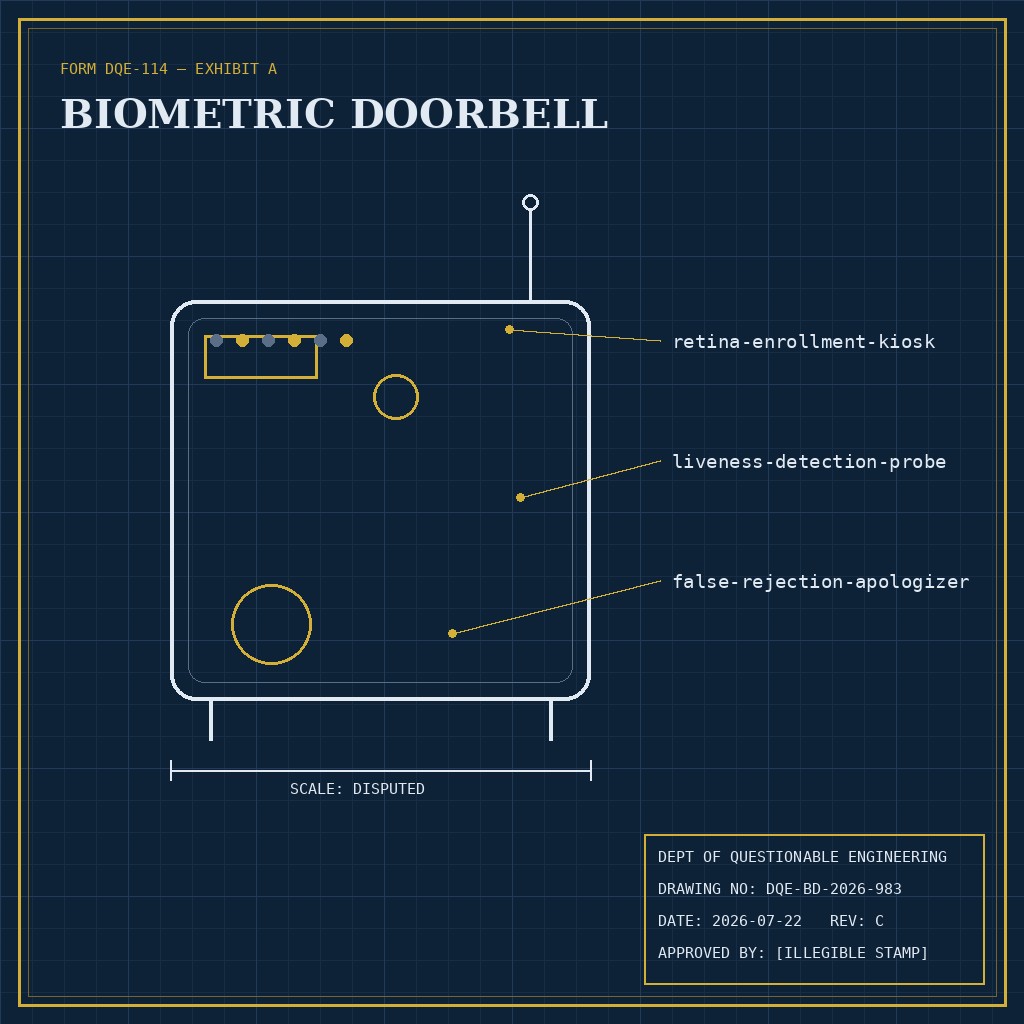
Fig. 1 — Biometric Doorbell, as entered into the Departmental Register. Scale disputed.
With the Biometric Doorbell, the Department modernizes announcing visitors at last. At its core sits a identity-bound access apparatus, ensuring that no outcome occurs without proper orchestration, attestation, and at least one retry.
Each use requires a signed VisitorAnnouncement, reviewed by the admission controller. In addition, all users must enroll all ten fingerprints and both retinas before first use. Early feedback described this as "a lot," which the Department has logged as a feature request.
Architecture
retina-enrollment-kiosk: Validates every incoming VisitorAnnouncement against policy; rejections are final but appealable in writing.
liveness-detection-probe: Coordinates the 5-component control plane; quorum required for all state changes.
false-rejection-apologizer: Publishes health status to 8,025 telemetry series and a wall-mounted dashboard no one watches.
Operational Characteristics
Emits 8,025 distinct telemetry series; three are believed to be meaningful
Compliance: self-certified against DQE-STD-194, a standard the Department authored for this purpose
Disaster recovery: full state restoration in under 55 hours, assuming the runbook can be located
Steady-state availability: 99.99% (excluding scheduled ceremonies, unscheduled ceremonies, and Tuesdays)
Comparison to Legacy Doorbell
Legacy doorbell: press the button; a chime sounds immediately
Biometric Doorbell: file a VisitorAnnouncement, pass policy validation, enroll all ten fingerprints and both retinas before first use, await scheduling, receive outcome; 8 min–27 min typical
Improvement: complete auditability, a striking architecture diagram, and the quiet confidence that nothing happens by accident anymore
System Status
Components Healthy
4 / 5
One component is in a degraded-but-compliant state.
Availability
99.99%
Measured since the last time measurement was reset.
Open Change Requests
61
All awaiting review by the subcommittee's subcommittee.