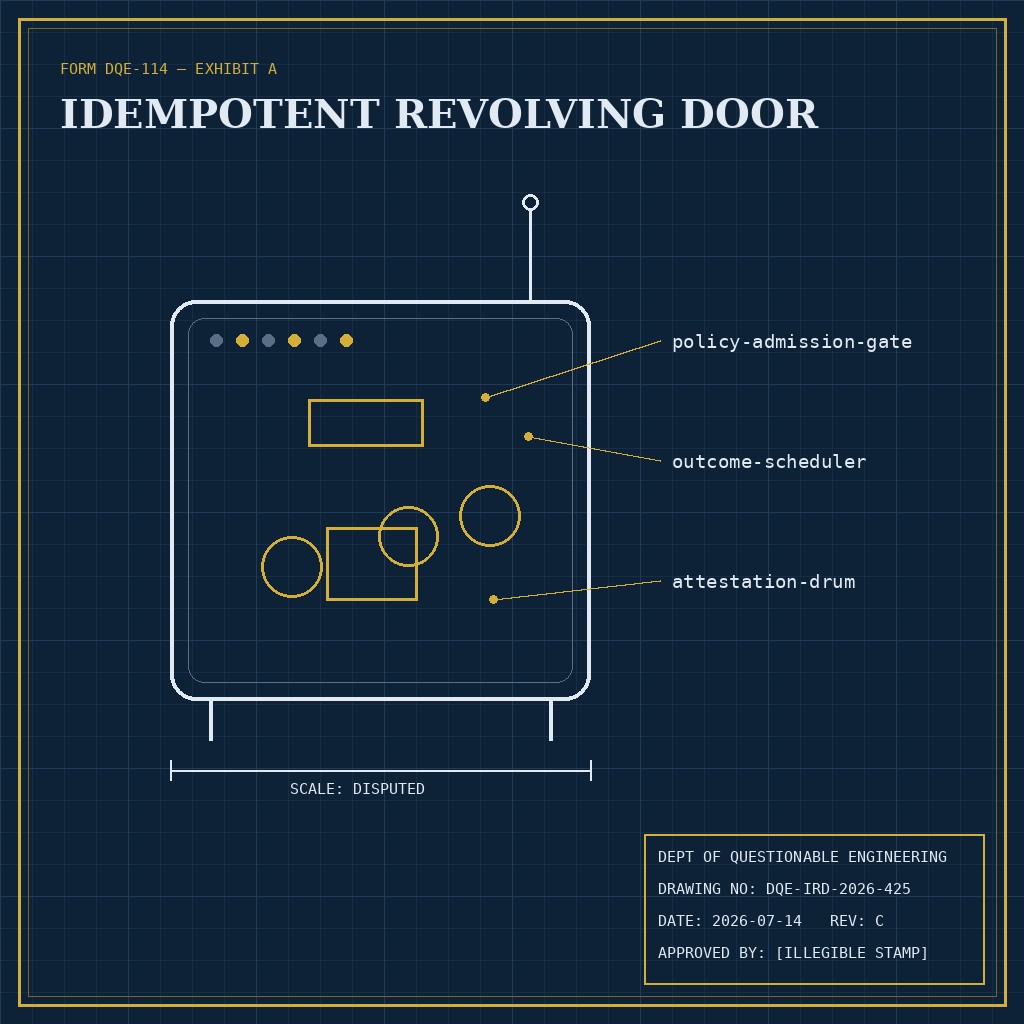
Fig. 1 — Idempotent Revolving Door, as entered into the Departmental Register. Scale disputed.
The Idempotent Revolving Door brings enterprise rigor to moving people through walls. By introducing a retry-safe operation surface between the user and the outcome, the Department has eliminated the dangerous immediacy of the legacy approach.
Operation begins by filing a TransitPetition, which enters a priority queue ordered by seniority. Note that operators must attach a unique idempotency key to every button press — a requirement introduced after Incident 47, about which no further questions are taken.
Architecture
deduplication-token-mint: Validates every incoming TransitPetition against policy; rejections are final but appealable in writing.
exactly-once-illusionist: Coordinates the 24-component control plane; quorum required for all state changes.
replay-window-custodian: Publishes health status to 2,924 telemetry series and a wall-mounted dashboard no one watches.
Operational Characteristics
P50 time-to-outcome: 5 min; P99: 52 min — a 942% governance premium over the legacy device, well within tolerance
Disaster recovery: full state restoration in under 71 hours, assuming the runbook can be located
Emits 2,924 distinct telemetry series; three are believed to be meaningful
Compliance: self-certified against DQE-STD-177, a standard the Department authored for this purpose
Comparison to Legacy Revolving Door
Legacy revolving door: push and walk; you are inside
Idempotent Revolving Door: file a TransitPetition, pass policy validation, attach a unique idempotency key to every button press, await scheduling, receive outcome; 5 min–52 min typical
Improvement: complete auditability, a striking architecture diagram, and the quiet confidence that nothing happens by accident anymore
System Status
Components Healthy
23 / 24
One component is in a degraded-but-compliant state.
Availability
99.97%
Measured since the last time measurement was reset.
Open Change Requests
45
All awaiting review by the subcommittee's subcommittee.